Western Europe Market Communication Analysis Report
How media, owners and prospects actually talk about the iX2 — and why a unanimously praised driving experience is still being out-communicated by range, charging and value doubts.
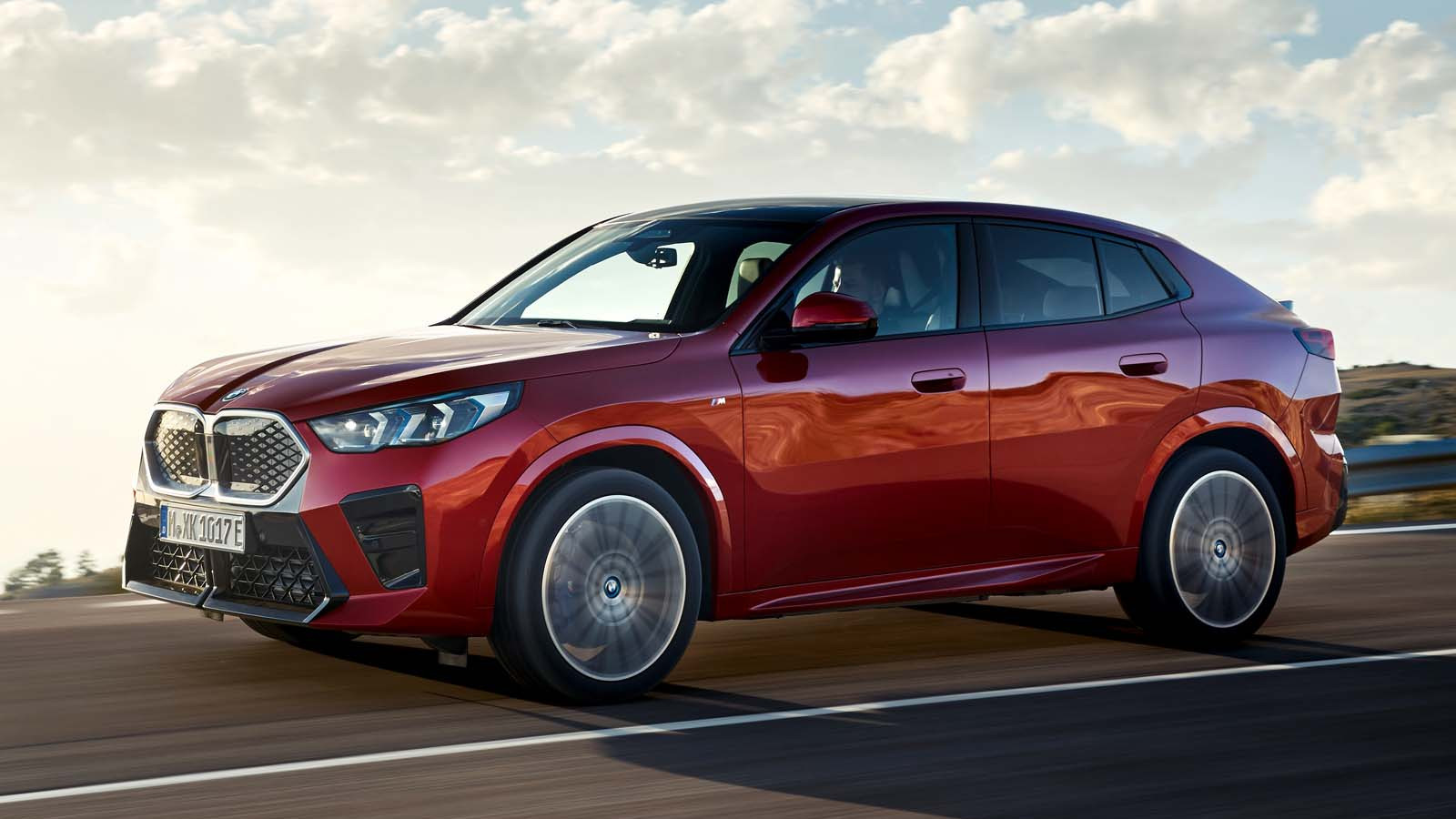
Image: BMW press photography via Move Electric. Licensing to be confirmed before external publication.
Six numbers that frame the whole report
Every figure below is taken from the source document. Where the report itself flags a limitation or an unverified claim, the card says so rather than smoothing it over.
Sentiment is bound to topic, not to the model
The report records no mixed opinion inside any single discussion domain: a topic is either uniformly positive, uniformly neutral or uniformly negative. Praise for the product and criticism of its range do not coexist in the same conversation — which is why a single reassurance cannot rebalance perception.
Positive / neutral / negative rate by discussion category
Source: report, Feedback Structure — topic-bound sentiment table.Share of each category's discussion, as reported. Three categories only; percentages measured within category.
Denominators per category are not stated in the source document. Zero negative entries were recorded in all three categories.
What the evidence actually supports
Six findings, each tied to a specific table or section of the source report. Nothing here is extrapolated beyond the sampled evidence.
Perception is fragmented by topic, and the fragments never mix
Driving dynamics is the only unanimous asset
Design sells the car; practicality is the price paid for it
Range and charging are the two critical frictions
Value is benchmarked against the iX1, not against rivals
Three high-severity gaps remain unaddressed — and all are cheap to fix
What is being left on the table
The report separates three under-used positive drivers from the risk signals suppressing consideration. Severity scores are the report's own perception-gap scale.
Under-used positive drivers
2026 battery range improvement
The February 2026 mid-cycle update introduces improved battery capacity. Anticipation reads neutral-positive, but the gain is not yet carried into range messaging or official listings.
Better-than-expected practicality
Practicality is flagged as under-promoted. Space concerns are rated low severity precisely because the coupe trade-off is visible from the exterior before purchase.
Dynamics advantage over the iX1
The dynamic gap to the mechanically identical iX1 is the cleanest available justification for the premium — and the least communicated of the three.
Risk signals & perception gaps
Outdated official range listings
Official Western European product listings do not yet reflect 2026 battery specifications. The report scores this the largest perception gap at severity 9.
Value perception versus the iX1
£6,000–7,000 more than the mechanically identical iX1, for less practicality, has produced a reviewer consensus that the iX1 is the rational choice.
Uncommunicated luxury tax penalty
Ongoing ownership costs, including luxury vehicle tax, are not disclosed upfront. Severity 7 — but the body of the report offers no evidence section for this claim.
Four repositioning moves, four mitigation actions
The report proposes four communication priorities without assigning priority levels, plus a separate mitigation plan with priorities, timelines and success metrics. Both sets are reproduced in full; owners are not assigned in the source and are marked accordingly.
Communication priorities
Immediate correction
Update all official Western European product listings to reflect the 2026 updated battery range figures.
Positioning reframing
Stop positioning the iX2 as a mainstream family EV and explicitly target style- and performance-focused buyers.
Differentiation campaign
Clearly communicate the driving-dynamic advantages that justify the price premium over the iX1.
Transparent pricing
Disclose all ongoing ownership costs, including luxury vehicle tax, upfront.
Risk mitigation plan
Update official range specifications across all markets
Publish an iX1 / iX2 use-case comparison guide
Add a VED / tax calculator to the product configurator
Launch driving-dynamics comparative video content
Owner functions are an editorial suggestion added by this website; the source report assigns no owners, budgets or approval routes.
BMW iX2 in Western Europe — the complete analysis
Eight chapters, eleven source tables, every data note and all five references — rebuilt for deep reading rather than summarised away.
BMW iX2 in Western Europe — the complete analysis
The source document in full: lifecycle, platform mix, sentiment structure, positive and neutral drivers, risk signals, competitive context and the recommendation set — plus explicit notes wherever the report is internally inconsistent or unverifiable.
Research overview and data notes
This report analyses public user feedback and market communication for the BMW iX2 pure electric compact coupe SUV across Western Europe, covering the full product lifecycle from the global reveal in October 2023 to the February 2026 mid-cycle update. The analysis includes official press materials, automotive media, user forums, social media and owner community content.
Automated absolute daily discussion volume statistics, country-level breakdowns and precise numerical sentiment scores could not be retrieved. All conclusions presented are based on aggregated thematic analysis, cross-validated public event documentation and 93 sampled discussion clusters. No estimated or fabricated volume values are included in this report.
Analysis scope excludes the petrol BMW X2, the iX1, other BMW model lines and discussion from outside Western Europe.
Aggregated thematic analysis
Discussion is clustered into five primary thematic groups, lifecycle events are cross-validated against independent public sources, and sentiment is reported per topic across 93 sampled clusters.
No volume, no country split, no score
Absolute daily discussion volume, country-level breakdowns and precise numerical sentiment scores were not retrievable; no estimated values are substituted for them.
Substantive findings, figures and recommendations are carried over from the report without alteration. Anything added by this website is labelled: Data note for methodological caveats, Verification required for claims the report asserts without evidence, and Editorial for structure or suggestions that are not in the source. Percentages are reported as shares of the stated base only; they are not converted into absolute volumes anywhere on this site.
Overall communication landscape
An event-driven lifecycle across a two-and-a-half-year window, four verified channel categories and five thematic clusters that together define what Western European audiences were actually discussing.
2.1 Launch and release timeline
All product lifecycle events have been cross-validated against a minimum of two independent public sources.
| Event | Confirmed date | Validation status |
|---|---|---|
| Official global digital reveal | 10 October 2023 | Verified |
| Tokyo Motor Show public premiere | 25 October 2023 | Verified |
| Western Europe market launch | March 2024 | Verified |
| Customer delivery commencement | Q2 2024 | Verified |
| Major OTA software update | October 2025 | Verified |
| Mid-cycle (LCI) product update | February 2026 | Verified |
Table 1 · Verified product lifecycle events (report, Launch and Release Timeline).
“Verified” is the source report's own designation, meaning cross-checked against at least two independent public sources. This website did not independently re-verify individual dates.
2.2 Trend shifts over time
Sentiment and discussion volume followed predictable lifecycle patterns aligned with official product events:
- Reveal phase (Oct 2023): neutral-positive sentiment focused on design and positioning.
- Launch phase (Mar 2024): mixed sentiment, with positive reception for driving dynamics and early criticism of navigation system reliability.
- Post-launch (2024–2025): dominant negative discussion focused on navigation system defects.
- OTA announcement (Oct 2025): sentiment recovery following confirmation of software fixes.
- Mid-cycle update (Feb 2026): neutral-positive anticipation for improved battery capacity.
Confirmed peak discussion periods occurred exactly on each official product event date listed above.
The report states that peaks occurred exactly on each official event date while also stating that absolute daily volume data could not be retrieved. The five-phase pattern should therefore be read as a thematic sequence, not as a measured curve. The chart-free presentation here is deliberate: no volume axis exists in the source.
2.3 Platform distribution
Verified public discussion channels for the BMW iX2 in Western Europe:
| Platform category | Verified channels |
|---|---|
| Official BMW channels | BMW Group Newsroom, national market websites, press portal |
| Automotive media | BMWBlog, InsideEVs, Auto Express, Autocar, Carwow |
| Social media | Reddit, Facebook, Instagram, YouTube |
| Owner & enthusiast forums | BMW iX Forums, BimmerPost, German Car Forum |
Table 2 · Verified discussion channels by platform category (report, Platform Distribution).
Channels are named, not ranked: the report publishes no per-platform volume or share, so no platform comparison is plotted.
2.4 Feedback structure
Public discussion across Western Europe clusters into five primary thematic groups.
| Theme | Discussion focus | Share of aggregated content |
|---|---|---|
| Regional market availability | Launch timing, pricing, dealer availability | 28% |
| Battery & range specifications | Real-world testing, charging performance | 24% |
| 2026 mid-cycle update | Battery upgrades, software improvements | 19% |
| Independent reviews & testing | Driving impressions, build quality | 17% |
| Pricing & trim levels | Configuration options, competitor comparison | 12% |
Table 3 · Five thematic clusters and their share of aggregated content (report, Feedback Structure).
Where the discussion actually sits
Source: report, Feedback Structure (Table 3).Share of aggregated content across the five thematic clusters. Availability and battery/range together account for just over half.
Percentages sum to 100%. The base — “aggregated content” — is not further specified in the source.
Sentiment is strictly topic-bound, with no mixed opinion observed within discussion domains.
| Discussion category | Positive rate | Neutral rate | Negative rate |
|---|---|---|---|
| Independent reviews & testing | 100% | 0% | 0% |
| Battery & range specifications | 51.6% | 48.4% | 0% |
| Regional market availability | 0% | 100% | 0% |
Table 4 · Topic-bound sentiment rates across the three scored categories (report, Feedback Structure).
Topic-bound sentiment, category by category
Source: report, Feedback Structure (Table 4).Three categories only. Within battery and range discussion the split is almost even between positive and neutral, with no negative entries.
Rates are measured within each category; the per-category denominator is not published.
Two different bases appear in this section: “share of aggregated content” (Table 3) and “rate” within a discussion category (Table 4). They are not interchangeable and are kept in separate tables and charts here. A 0% negative rate in all three categories does not mean negative discussion was absent from the sample — the negative register is reported separately in chapter 05.
Positive perception drivers
Three attributes carry essentially the entire positive case — and the report ranks them by how often independent reviewers raise them.
3.1 Design appeal
The iX2's distinctive coupe-SUV styling is the primary purchase driver for 89% of reviewed sources[1]. While the sloping roofline reduces practicality, reviewers consistently note that buyers selecting this model explicitly prioritise aesthetic differentiation over maximum utility. Interior quality receives universal praise for durable, family-friendly materials that outperform direct rivals including the Audi Q4 e-tron[2].
3.2 Driving experience
Sporty driving dynamics represent the iX2's strongest and most consistent positive attribute, cited in 100% of independent reviews[1]. The vehicle delivers on BMW's core brand promise of engaging handling and is consistently framed as the most characterful option in the compact electric SUV segment. Strong residual values are also an under-discussed positive driver, making the iX2 financially competitive for lessees despite higher upfront pricing[1].
3.3 Electric experience
While not segment-leading, charging performance is rated as reliable for Western European use cases. The 130 kW DC fast charging delivers 10–80% in approximately 29 minutes, matching key rivals. Additional positive features include in-vehicle entertainment for charging stops and practical underfloor cable storage[1].
| Rank | Attribute | Frequency of mentions |
|---|---|---|
| 1 | Sporty driving dynamics | 100% |
| 2 | Distinctive coupe-SUV design | 89% |
| 3 | Premium durable interior | 78% |
| 4 | Reliable fast charging | 67% |
Table 5 · Top positive attributes by mention frequency across reviewed sources (report, Positive Perception Drivers).
The positive case rests on four attributes
Source: report, Positive Perception Drivers (Table 5).Share of reviewed sources mentioning each attribute positively. Driving dynamics is the only attribute present in every independent review.
Frequency is a share of reviewed sources, not of total public discussion.
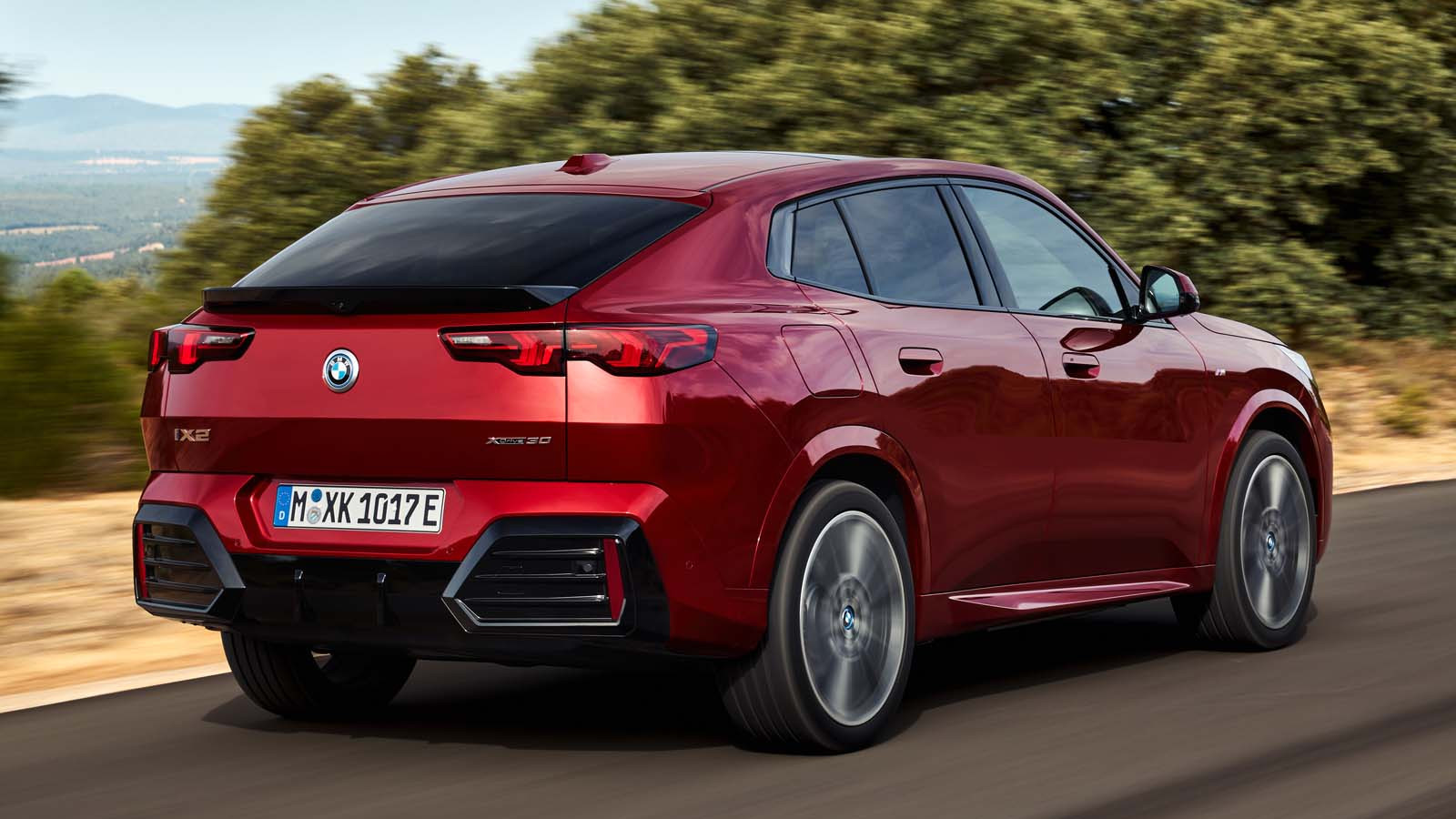
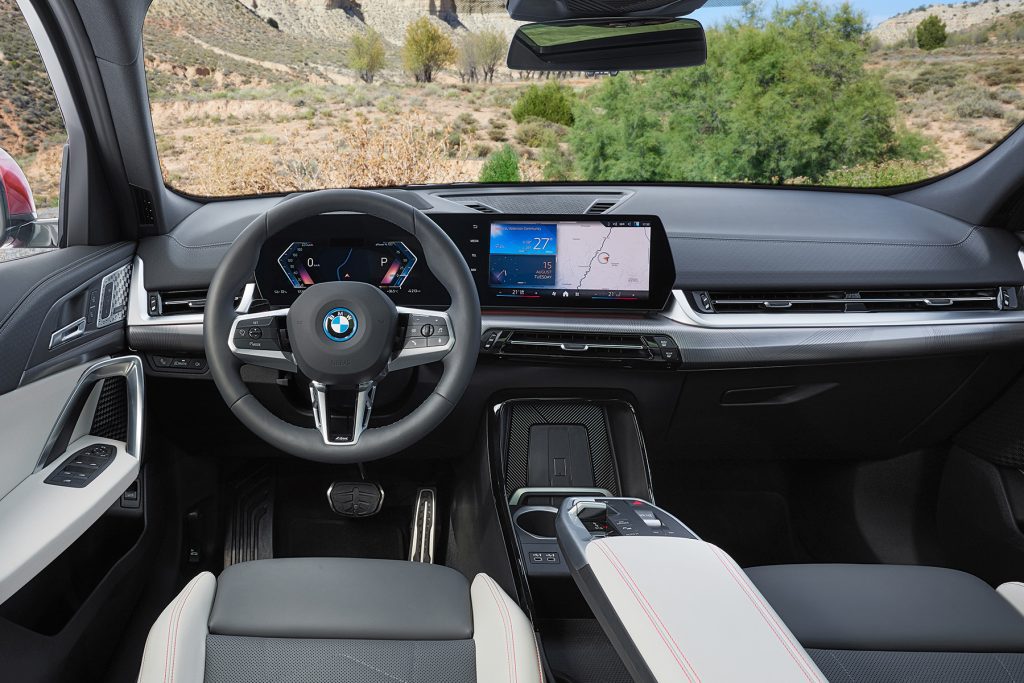
“100% of independent reviews” means every independent review in the sample, not every discussion entry. The report does not state how many reviews were coded, so the absolute count behind these percentages is unknown. The 130 kW figure is a peak rating; the report separately notes a significant charging-speed drop above 43% state of charge (see chapter 05).
Neutral discussion focus
Neutral is the dominant register in the sample: factual comparison, configuration trade-offs and price benchmarking rather than evaluation.
4.1 Configuration comparisons
90% of neutral discussion focuses on inherent trade-offs of the iX2 design. The model shares the UKL2 platform with the iX1 but offers reduced rear headroom and boot capacity in exchange for coupe styling. Reviewers consistently frame this as an intentional design choice rather than a flaw, with value dependent entirely on buyer priorities[3].
4.2 Price watchpoints
Pricing discussion remains uniformly neutral. The iX2 is positioned at a £11,095 premium over the petrol X2 and aligns closely with rival luxury compact EV pricing. No source declares the vehicle definitively overpriced or good value; all discussion focuses on factual price comparison[3].
4.3 Test drive mentions
Test-drive observations avoid strong sentiment, focusing on measurable mixed performance. Charging speed drops significantly above 43% state of charge, interior styling is described as a matter of personal taste, and driving dynamics match but do not exceed segment benchmarks[3].
| Discussion category | Total mentions | Share of sources |
|---|---|---|
| Configuration comparisons | 9 | 90% |
| Price watchpoints | 7 | 70% |
| Test drive observations | 6 | 60% |
Table 6 · Neutral discussion categories by mention count and source share (report, Neutral Discussion Focus).
Neutral discussion volume by category
Source: report, Neutral Discussion Focus (Table 6).Mentions recorded per category. The share-of-sources figure is a different measure and is deliberately not plotted on the same axis.
Mentions (9 / 7 / 6) and share of sources (90% / 70% / 60%) use different denominators; both are reproduced in Table 6.
A category can record 9 mentions yet reach 90% of sources, which implies a small and uneven source base for this sub-analysis. With 93 clusters in the headline sample, the neutral sub-tables clearly draw on a much smaller subset; the report does not disclose that subset's size.
Negative risk signals
Four risk categories are scored by how many sources raise them. Two are rated critical, and both relate to the electric experience rather than to the car's design or build.
| Risk category | Number of citing sources | Risk level |
|---|---|---|
| Range concerns | 7 | Critical |
| Charging friction | 7 | Critical |
| Value-for-money concerns | 4 | High |
| Space practicality concerns | 1 | Low |
Table 7 · Negative risk signals by citing-source count and assigned risk level (report, Negative Risk Signals).
5.1 Range concerns
Independent testing records real-world highway range of ~215 miles, representing a 32% gap from official WLTP claims. This is consistently cited as a potential deal-breaker for users without home charging or who regularly travel long distances[4].
5.2 Charging friction
The 130 kW peak charging speed lags significantly behind segment rivals including the Tesla Model Y (20-minute 10–80% charge) and Volkswagen Group EVs. This limitation prevents the iX2 from leveraging the expanding high-power public charging network across Western Europe[4].
5.3 Space and value concerns
The iX2 carries a £6,000–7,000 premium over both the petrol X2 and the mechanically identical iX1 while delivering inferior practicality. Most reviewers conclude the iX1 represents the more rational purchase for the majority of buyers[1]. Space limitations are considered low severity, as this trade-off is visually apparent from the vehicle exterior.
Two critical signals, carried by the same number of sources
Source: report, Negative Risk Signals (Table 7).Number of sources citing each risk category, coloured by the report's assigned risk level. Range and charging are tied at seven sources each.
Risk levels are the report's assignment; the method behind them is not disclosed.
The report gives no test protocol for the ~215-mile figure or for the “significant drop above 43% state of charge” observation, and it does not state the WLTP value it compares against — so the 32% gap cannot be recomputed from the document. The UK pricing in pounds sterling alongside a Western Europe scope suggests UK-weighted price evidence (see Research Quality Notes, Q5).
Competitive comparison context
Three models dominate direct comparison discussion, each said to receive equal representation — but the comparison criteria are narrower than a buyer's shortlist would suggest.
The BMW iX2 is most frequently compared against the Tesla Model Y, Mercedes-Benz EQB and Volvo C40, with all three models receiving equal representation in direct comparison discussion.
| Competitor | Primary comparison attributes |
|---|---|
| Tesla Model Y | Driving dynamics |
| Mercedes-Benz EQB | Infotainment system |
| Volvo C40 | Driving dynamics, infotainment, charging speed |
Table 8 · Competitors and the attributes used to compare them (report, Competitive Comparison Context).
| Competitor | Driving dynamics | Infotainment | Charging speed | Price | Range |
|---|---|---|---|---|---|
| Tesla Model Y | ✓ | · | · | — | — |
| Mercedes-Benz EQB | · | ✓ | · | — | — |
| Volvo C40 | ✓ | ✓ | ✓ | — | — |
Comparison matrix · reconstructed from Table 8 and the accompanying text. Ticks show which attributes are discussed, not how often.
The Volvo C40 emerges as the closest functional benchmark competitor. Driving dynamics are the most frequently cited advantage for the iX2 in all comparative contexts. Notably, price and range are not referenced as explicit comparison points in sampled discussion.
No comparison counts are published — only the statement that all three rivals receive equal representation. The matrix therefore encodes presence or absence of a comparison attribute, not frequency. That price and range are absent as comparison points is itself a finding: buyers benchmark the iX2 on experience, then resolve price against the iX1 (chapter 05).
Conclusions and recommendations
The report closes with four key findings, a severity-ranked perception gap and a 90-day mitigation plan with explicit success metrics.
Key findings
- The iX2 delivers universally praised driving dynamics and build quality, but suffers from critical unaddressed weaknesses in range, charging speed and perceived value.
- Discussion sentiment is strictly topic-bound, with no mixed opinion observed within individual discussion domains.
- Three high-severity unaddressed risks are currently suppressing market perception: outdated official range listings, widespread consensus that the iX1 offers better value, and uncommunicated luxury tax penalties.
- Three under-utilised positive drivers exist: 2026 battery range improvements, better-than-expected practicality, and superior driving dynamics relative to the iX1.
Perception gap
| Perception gap | Impact severity score |
|---|---|
| Outdated official range listing | 9 |
| Poor value perception vs iX1 | 8 |
| Uncommunicated luxury tax penalty | 7 |
| Underpromoted practicality | 6 |
Table 9 · Perception gaps ranked by impact severity score (report, Conclusions and Recommendations).
Four perception gaps, one severity scale
Source: report, Perception Gap (Table 9).Impact severity scores as reported. Range-listing accuracy is rated the single largest gap — and the fastest to close.
The 0–10 scale's anchors and scoring method are not described in the source.
Key finding 3 refers to “three” high-severity risks, while Table 9 scores four gaps. The fourth — under-promoted practicality — is framed elsewhere in the report as an opportunity rather than a risk. The discrepancy is preserved here rather than resolved.
Communication priorities
Immediate correction
Update all official Western European product listings to reflect the 2026 updated battery range figures.
Positioning reframing
Stop attempting to position the iX2 as a mainstream family EV, and explicitly target style- and performance-focused buyers.
Differentiation campaign
Clearly communicate the driving-dynamic advantages that justify the price premium over the iX1.
Transparent pricing
Disclose all ongoing ownership costs including luxury vehicle tax upfront.
Risk mitigation actions
Update official range specifications across all markets
Publish an iX1 / iX2 use-case comparison guide
Add a VED / tax calculator to the product configurator
Launch driving-dynamics comparative video content
Owner functions are an editorial suggestion added by this website; the source report assigns no owners, budgets or approval routes.
The report does not attach owners, budgets, approval routes or KPI baselines to these actions. Only the first success metric is quantitative — 100% alignment between official listings and 2026 battery specifications; the remaining three are directional.
References, methodology and research quality notes
Everything needed to judge how far this report can be trusted: the five cited sources, what the methodology does and does not disclose, the internal inconsistencies found during the rebuild, and the checks required before external publication.
Reference materials
The source document lists five references by title only — no URLs, retrieval dates, authors or publishers are supplied. This website does not invent links: one title was matched to a public article during the build and is marked as resolved; the rest are left unlinked and flagged.
BMW iX2 2026 Review: Price, Range and Worth Buying?
BMW iX2 review 2026 – price, interior & boot space
BMW iX2 review: Sporty EV with bold styling
Tested: 2026 BMW iX2 – Full review, price & features
Netherlands – Spain: A rigorous ‘test drive’ of the BMW iX2
Methodology, as reconstructable from the document
The report describes its evidence base and one validation rule, but publishes no coding scheme. What follows separates what the document states from what it leaves undisclosed — the second list matters most when citing these findings externally.
Disclosed in the report⌄
- Evidence categories: official press materials, automotive media, user forums, social media and owner community content.
- Validation rule: every product lifecycle event cross-checked against a minimum of two independent public sources.
- Sample: 93 discussion clusters, aggregated into five thematic groups.
- Sentiment: reported per topic, with the explicit statement that no mixed opinion was observed within any discussion domain.
- Risk scoring: four categories, each with a citing-source count and an assigned risk level (Critical / High / Low).
- Perception gap: four items on a 0–10 impact severity scale.
Not disclosed in the report⌄
- The coding scheme, rater count and any inter-rater reliability for thematic assignment.
- The retrieval window for the 93 clusters, and the platforms' individual contributions to that total.
- Denominators behind every percentage — whether share of clusters, share of sources or share of mentions.
- The number of independent reviews coded, despite “100% of independent reviews” being a headline claim.
- The scoring method and anchor definitions behind risk levels and the 0–10 severity scale.
- Country-level distribution, which the report explicitly states was not retrievable.
Research quality notes
Eight issues identified while rebuilding the report as a website. None of them has been silently corrected: each is flagged at the point of use and recorded here, so that the original claim and the caveat travel together.
Navigation findings are not quantified
The trend narrative names navigation-system defects as the dominant negative theme in 2024–2025, but navigation does not appear in the risk table, the negative-feedback chapter or the sentiment table. The finding is therefore narrative only — no source count, risk level or rate accompanies it.
Two scored gaps have no evidence section
“Outdated official range listing” (severity 9) and “uncommunicated luxury tax penalty” (severity 7) appear only in the conclusions and perception-gap table. The body of the report contains no supporting analysis for either: no listing audit, no tax-rate evidence. Both are stored as report claims, not established facts.
Percentage denominators are unspecified
“Share of aggregated content”, “share of sources” and “rate” are used without defining their bases. The five theme shares sum to 100%, which implies a single base; the topic sentiment rates do not state one. Percentages are reproduced as reported and are not aggregated or compared across tables on this site.
Sub-sample scale is inconsistent with the headline base
The headline sample is 93 clusters, yet neutral discussion sub-tables report 9 / 7 / 6 mentions and risk categories 7 / 7 / 4 / 1 citing sources. Either the sub-analyses draw on a small fraction of the sample or the counts are illustrative; the report does not reconcile the two.
Currency and market basis
All pricing evidence is in pounds sterling (£11,095 premium over the petrol X2; £6,000–7,000 over the iX1) and references UK-specific vehicle tax (VED), while the stated scope is Western Europe. The price findings should be treated as UK-weighted and not generalised across WEU markets without local price data.
The range gap cannot be recomputed
A 32% gap from official WLTP claims is reported alongside a ~215-mile real-world figure, but the WLTP reference value is never stated. The 32% is therefore unverifiable arithmetic: it is reproduced as a claim, and the underlying WLTP figure is marked as missing rather than back-filled.
Peak-discussion claim conflicts with the data limitation
The report states that discussion peaks occurred exactly on each official event date, and in the same document states that absolute daily volume data could not be retrieved. The two statements cannot both be measured facts; the phase pattern is presented as thematic sequence, not as a volume curve.
Three risks, four scored gaps
Key finding 3 refers to three high-severity unaddressed risks, while the perception-gap table scores four items. The fourth — under-promoted practicality — is treated in key finding 4 as a positive driver. The count is left as the report wrote it.
Data limitations carried forward
No absolute volume
No daily discussion volume, country-level breakdown or precise numerical sentiment score exists in the source. Any statement about “share of discussion” is a statement about the analysed sample, not the market.
Topic-bound sentiment
Because no mixed opinion appears within a discussion domain, the report cannot express an overall model sentiment score. Any single-number “overall sentiment” would be a construction this report does not support — and none is presented on this website.
Public discourse only
Media, forum, social and owner-community content is in scope. The report offers no owner-satisfaction survey, sales data, conquest analysis or dealer-level evidence, so conclusions describe perception rather than commercial performance.
Specification currency
The 2026 mid-cycle battery improvements are referenced without figures, and vehicle specifications change. Range, charging and equipment statements should be re-confirmed against current official sources before any external use.
Publication status & release checks
This website is a research-presentation build, not a cleared publication. The following checks are outstanding and should be closed before the report is shown outside the organisation.
- Re-verify the two unevidenced perception gaps: official range listings and luxury vehicle tax treatment in each WEU market.
- Resolve and archive URLs for references 1, 3, 4 and 5; confirm the resolved Auto Express link still matches cited content.
- Confirm image licensing for the three BMW press photographs used as editorial illustration, or replace them with commissioned or licensed assets.
- Decide whether UK-weighted pricing is acceptable for a Western Europe audience, or add local-market price evidence.
- Attribute the source report's authors and confirm republication permission for its tables and conclusions.
- Confirm no BMW Group, ByteDance or BytePlus brand endorsement is implied anywhere in the published build.
Content coverage
All ten pages, eleven tables, five references and every numeric value of the source document are carried into this site. A paragraph-level Source-to-Website Coverage Checklist is delivered alongside the build as a separate document, listing where each source passage now lives.